"Sharing can be a way of healing. Grief and loss can isolate,
anger even alienate. Shared with others, emotions unite
as we see we aren't alone. We realize others weep with us."
~Susan Wittig Albert

Through our writing, we walk out of the darkness into the light
together, one small step at a time, recording history, educating
America, and we are healing.
~CJ/Todd Dierdorff


Sunday, April 6, 2014

Forgiveness


By Robert S. Cosmar

Some wounds never heal, because we are unable to express our feelings about them.

Our beliefs stand in judgment over our experiences and we cannot find room to forgive ourselves to release them. Our mind and ego are both cruel taskmasters that give no quarter in matters of what we, or society, might think of as right and wrong.

Inner conflict torments us consciously and unconsciously when we are forced to do that which feels at odds with our heart and soul. The mind and ego can only judge, not forgive, because forgiveness is beyond the duality of mind vs. heart.

We do not need to forgive ourselves. We have done nothing against the universe. It is the mind and ego that feel guilt and shame for any actions we have taken. They weigh every thought and action and compare it against their code of right and wrong.

The mind and ego set up commandments to judge the self, knowing that they cannot keep them. Then they judge self again for failing to keep them. It is a no-win scenario.

Only through awareness and the surrender of the mind and ego do we find the forgiveness and peace we seek.


To learn more about Robert Cosmar, please visit:  
Goodreads: Robert S. Cosmar

If you have questions about this article, you may email Robert.


“I am only one, but I am one. I can't do everything, but I can do something. The something I ought to do, I can do, and by the grace of God, I will.” ~Everett Hale

Saturday, April 5, 2014

Proud American


by Jerome Cleveland
Pierre, SD

In the 1960s, many young people were called to serve their country. Many of our parents had been veterans of WWII and their patriotism was reflected in the family values and carried over in our thinking.

The idea that if our country called us to serve, it was prevalent and unquestioned—and we answered the call.

I remember being a college student 18 years old, and reading in the newspaper that my high school neighbor and friend, Roger Jensen, had been killed in Vietnam. That is when I felt the call to duty, and volunteered for the draft, late in 1968.

As the Vietnam War lingered on, and the media exposure, political skepticism, and rallies for peace impacted the soldiers and their thinking, it became difficult to remain focused on duty and mission. Yet, we were soldiers, young, and dedicated to serve.

We saw a lot and learned a lot, and I for one feel good that I served my country, and saddened that the outcome was what it was. I am proud to have served, and I remain a patriotic and proud American.

We don’t always agree with decisions our leaders make, but we do have an obligation, again today, to defend our country when called upon, without question. Everyone, who has served in Vietnam, or any other war, deserves the respect of all citizens for putting their life on the line for freedom. 

Let no person ever take for granted what we have here in America, and don’t forget that many have paid the ultimate price in the past and many more continue to do so today. Celebrate and appreciate your veterans, who gave what they had to give for your freedom and the United States of America.

Lastly, don’t ever let anyone like Jane Fonda, influence your thinking with her distorted and wicked views and unpatriotic thinking. People like her are as responsible for lost lives as the enemy themselves. 

As Americans, when called to serve, we do so, and are proud of it. We all would prefer peace to war, but there is a price for peace, and it needs to be protected.


“I am only one, but I am one. I can't do everything, but I can do something. The something I ought to do, I can do, and by the grace of God, I will.” ~Everett Hale

Thursday, April 3, 2014

Do You Still Think About Vietnam?

This story came to me from a friend, who received it anonymously via an e-mail.  All I know is, the author is a Vietnam Veteran. After reading his story, I felt compelled to share it with you. 

If for some reason you didn't participate in the Vietnam War, this will give you some insight into how a Vietnam veteran's mind works. He writes: 

A couple of years ago, someone asked me if I still thought about Vietnam. I nearly laughed in their face. How do you stop thinking about it? Every day for the past forty years, I wake up with it -- I go to bed with it. This was my response:

"Yeah, I think about it. I can't stop thinking about it. I never will. But, I've also learned to live with it. I'm comfortable with the memories. I've learned to stop trying to forget and learned to embrace it. It just doesn't scare me anymore."

A lot of my "brothers" haven't been so lucky. For them, the memories are too painful, their sense of loss too great. My sister told me of a friend she has whose husband was in the Nam. She asks this guy when he was there.

Here's what he said, "Just last night." It took my sister a while to figure out what he was talking about. Just Last Night. Yeah, I was in the Nam. When? Just last night, before I went to sleep, on my way to work this morning, and over my lunch hour. Yeah, I was there

My sister says I'm not the same brother who went to Vietnam. My wife says I won't let people get close to me, not even her.They are probably both right.

Ask a vet about making friends in Nam. It was risky. Why? Because we were in the business of death, and death was with us all the time. It wasn't the death of, "If I should die before I wake." This was the real thing. The kind where boys scream for their mothers. The kind that lingers in your mind and becomes more real each time you cheat it. You don't want to make a lot of friends when the possibility of dying is that real, that close. When you do, friends become a liability.

A guy named Bob Flanigan was my friend. Bob Flanigan is dead. I put him in a body bag one sunny day, April 29, 1969. We'd been talking, only a few minutes before he was shot, about what we were going to do when we got back to the world. Now, this was a guy who had come in country the same time as me. A guy who was loveable and generous. He had blue eyes and sandy blond hair. When he talked, it was with a soft drawl. I loved this guy like the brother I never had.

But, I screwed up. I got too close to him. I broke one of the unwritten rules of war. DON"T GET CLOSE TO PEOPLE WHO ARE GOING TO DIE. You hear vets use the term "buddy" when they refer to a guy they spent the war with. "Me and this buddy of mine."

Friend sounds too intimate, doesn't it? "Friend" calls up images of being close. If he's a friend, then you are going to be hurt if he dies, and war hurts enough without adding to the pain. Get close; get hurt. It's as simple as that.

In war you learn to keep people at that distance my wife talks about. You become so good at it, that forty years after the war, you still do it without thinking. You won't allow yourself to be vulnerable again.

My wife knows two people who can get into the soft spots inside me --my daughters. I know it bothers her that they can do this. It's not that I don't love my wife. I do. She's put up with a lot from me.She'll tell you that when she signed for better or worse, she had no idea there was going to be so much of the latter.

But with my daughters it's different. My girls are mine. They'll always be my kids. Not marriage, not distance, not even death can change that.They are something on this earth that can never be taken away from me. I belong to them. Nothing can change that. I can have an ex-wife; but my girls can never have an ex-father. There's the differance.

I can still see the faces, though they all seem to have the same eyes. When I think of us, I always see a line of "dirty grunts"sitting on a paddy dike. We're caught in the first gray silver between darkness and light. That first moment when we know we've survived another night, and the business of staying alive for one more day is about to begin. There was so much hope in that brief space of time. It's what we used to pray for. "One more day, God. One more day."

And I can hear our conversations as if they'd only just been spoken I still hear the way we sounded. The hard cynical jokes, our morbid senses of humor. We were scared to death of dying, and tried our best not to show it.

I recall the smells, too. Like the way cordite hangs on the air after a fire-fight. Or the pungent odor of rice paddy mud. So different from the black dirt of Iowa. The mud of Nam smells ancient, somehow. Like it's always been there. And I'll never forget the way blood smells, sticky and drying on my hands. I spent a long night that way once. The memory isn't going anywhere.

I remember how the night jungle appears almost dreamlike as the pilot of a Cessna buzzes overhead, dropping parachute flares until morning. That artificial sun would flicker and make shadows run through the jungle. It was worse than not being able to see what was out there sometimes.

I remember once looking at the man next to me as a flare floated overhead. The shadows around his eyes were so deep that it looked like his eyes were gone. I reached over and touched him on the arm; without looking at me he touched my hand. "I know man. I know." That's what he said. It was a human moment. Two guys a long way from home and scared to death.

God, I loved those guys. I hurt every time one of them died. We all did. Despite our posturing. Despite our desire to stay disconnected, we couldn't help ourselves. I know why Tim O' Brien writes his stories. I know what gives Bruce Weigle the words to create poems so honest that I cry at their horrible beauty. It's love. Love for those guys we shared the experience with.

We did our jobs like good soldiers, and we tried our best not to become as hard as our surroundings.You want to know what is frightening? It's a nineteen-year-old-boy who's had a sip of that power over life and death that war gives you. It's a boy who, despite all the things he's been taught, knows that he likes it. It's a nineteen-year-old who's just lost a friend and is angry and scared and determined that, "some *@#*s gonna pay". To this day, the thought of that boy can wake me from a sound sleep and leave me staring at the ceiling.

As I write this, I have a picture in front of me. It's of two young men. On their laps are tablets. One is smoking a cigarette. Both stare without expression at the camera. They're writing letters. Staying in touch with places they'd rather be. Places and people they hope to see again.

The picture shares space in a frame with one of my wife.. She doesn't mind. She knows she's been included in special company. She knows I'll always love those guys who shared that part of my life, a part she never can. And she understands how I feel about the ones I know are out there yet. The ones who still answer the question, "When were you in Vietnam?"


“I am only one, but I am one. I can't do everything, but I can do something. The something I ought to do, I can do, and by the grace of God, I will.” ~Everett Hale

Wednesday, April 2, 2014

Tears of a Warrior

by John Norwood
Retired USAF CM Sgt.
Aircraft Flight Engineer

A man of eighteen years, barely dry behind the ears, hears Uncle Sam’s call.  In eight short weeks, the change is as radical as a caterpillar becoming a butterfly -- only this change has no beauty to it. The young boy is transformed into a soldier, an instrument of war.

The days of taking his girl to lover’s leap and skipping class to go fishing are all gone. He is thrust into a world of violence against his fellow man. He begins to see the ravages of war. He learns to kill, not for sport or food, but for territory and ideals. He learns these skills with dedication and without question, because he is doing what he is ordered to do.

Suddenly he is thrust into a world of pain, death, blood and pure fear. He sees things that no amount of education, or training, prepared him for. 

His friends are now few and close, yet distant, because getting too close will cause pain when that friend is no longer there. The cold, damp, heat, and loneliness become his constant companion. At times he tries to deaden the pain with booze. He fights with himself, trying to bury what he sees. He does his job without emotion, knowing if he feels, he’ll go nuts.

Then suddenly it’s all over.  He sheds his uniform and finds himself back on Main Street USA. When he sees his old schoolmates, he finds he no longer has anything in common with them. He cannot talk about his experiences because they won’t understand. His youth was robbed from him and he no longer trusts those around him with the ease he once did.

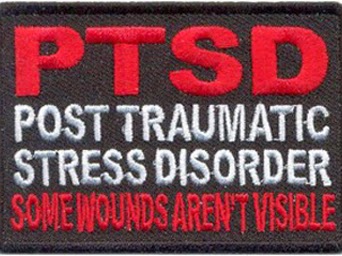
He has wounds you cannot see; not wounds of the body, but wounds of the soul, mind and spirit.  No one can see them. No one can see the scars. 

He drifts back to a time when he felt the pain for real. He seeks out answers he cannot find. At times he feels out of control and tries to find anything he believes will give him control, like booze and drugs, or he buries himself in work to the point of exhaustion.

He withdraws from relationships for fear of loss. He rejects authority for authority brought him harm in the past. He feels alone in a world that doesn’t seem to care. He hurts, but no one can see the wounds; no one hears his cries for help. He is judged by what others can only see on the surface. 

They don’t see the Unseen Wounds. They don’t hear his silent cries.  All he can do is ask, “Why can’t you see what this has done to me?”


“I am only one, but I am one. I can't do everything, but I can do something. The something I ought to do, I can do, and by the grace of God, I will.” ~Everett Hale

Tuesday, April 1, 2014

Before the War: by Penny Rock


Penny Rock


BEFORE THE WAR

I wonder what's the matter with him.
He's not the way he was before.
He's not the way he used to be.
The way he was before the war.

He had no way of knowing
What horrors were in store.
Then communication ceased
When he went off to war.

He left while only in his teens.
Now he's so much older.
The warmth of his youth is gone.
His spirit's so much colder.

His eyes look deeply haunted.
He has no joy anymore.
He doesn't laugh and rarely smiles.
He stares down at the floor.

He speaks in cryptic code.
He talks of blood and gore.
Then lapses into silence
Since he came back from war.

I wonder what he saw there
That fills his eyes with fright.
All those unknown terrors
Keep him awake at night.

Certain sounds will startle him
And send him out the door.
Will he ever have peace again,
As he had before the war?

He turns away from mirrors.
Who he sees must frighten him.
There's no respite in his mind
Because all his thoughts are grim.

I don't know what to say to him.
I can't talk as I did before.
He's not the person that I knew
Before he went to war.

He doesn't even look the same,
So pale and so thin.
It's like another person
Came back inside his skin.

He used to be such fun,
So easy to adore.
It's like he disappeared
When he returned from war.

I wonder what became of him.
I never see him anymore.
He's not the person he once was.
I mean, before the war.

Copyright 2003 Penny Rock All Rights Reserved.

[Penny Rock grew up in Minneapolis. She served in Vietnam from 1967-68 as a nurse during the TET Offensive.

She wrote poems to keep her center and to process the horrors of war. When she returned home, she found that no one wanted to hear about what war is really like, so she went silent, like so many did who returned.

Twenty-five years later, upon her diagnosis of cancer, the poetry started to flow again. She has published two poetry books about war: "He Called Me Lieutenant Angel: A Love Song From War", and "We Declare: The Truth about War and our Responsibility for Peace".]


“I am only one, but I am one. I can't do everything, but I can do something. The something I ought to do, I can do, and by the grace of God, I will.” ~Everett Hale

Monday, March 31, 2014

PTSD Today

More Vietnam Vets are Getting Help for PTSD

[Stars and Stripes, March 31, 2014]

Nearly 46 years after being wounded in Vietnam, Peter Halas applied for and received a post-traumatic stress disorder disability from the Department of Veterans Affairs.

The former Akron, Ohio, resident is not alone.

Dr. Edgardo Padin-Rivera, chief of psychology and PTSD expert at the Louis Stokes VA Cleveland Medical Center, said many Vietnam vets are applying for disability as they remember more about their combat experiences.

In Halas' case, he already had a disability from physical wounds he received in Vietnam. He was injured by a land mine in 1968.
But his PTSD disability was awarded only recently after specific memories came back while talking about the war with VA counselors.

Padin-Rivera said there are 326,530 Vietnam veterans with a PTSD disability -- a figure that is climbing every year.

As veterans age, the ways they had to defend against memories of combat begin to fade and they become more troubled by their war experiences, he said.

"It is about emotions of vulnerability and helplessness," he said. "And this brings up memories of those time periods when they felt vulnerable and helpless and those experiences have to do with war experiences."

So when veterans go to the VA for medical care, they are asked questions about their mental health, Padin-Rivera said.

"Now that we are asking the question, they begin to talk about it," the psychologist said. "We try to make it OK for them to talk about this and do away with the stigma of mental health. We saw this with World War II vets and are seeing it with the younger generation of vets from Iraq and Afghanistan."

The memories came back to Halas, 68, as he began talking to VA counselors about his military service.

He wrote about one incident in support of his PTSD diagnosis: "Fire fight for a day and a half, seeing fellow comrades wounded, some mortally by taking a direct hit by mortars ... Then being told to clean up blood, bones, organ splatters from inside of vehicles."

Halas said he's had anger issues over the years and now realizes it was part of the PTSD.

"You don't realize it until you start thinking about it," he said.

Halas -- who retired from Cavanaugh Building Corp. in Akron and moved to Temecula, Calif., in 2011 -- said he now receives about $1,400 a month for his PTSD disability, in addition to the $1,600 a month he was receiving for his war injuries.

He's also trying to straighten out the official record on his service awards.

The Department of Veterans Affairs has changed his DD-214 to reflect one Purple Heart, but Halas says he received three, and a Bronze Star, for his service.

He's still working on getting the file corrected and said he wants to leave an accurate account of his military experience for his family.

"It wasn't important before, when I was a young kid," said Halas, who attended Copley High School. "Now I am an older person and I think about it, those things are important. I damn near gave my life for it."

jcarney@thebeaconjournal.com


“I am only one, but I am one. I can't do everything, but I can do something. The something I ought to do, I can do, and by the grace of God, I will.” ~Everett Hale