"Sharing can be a way of healing. Grief and loss can isolate,
anger even alienate. Shared with others, emotions unite
as we see we aren't alone. We realize others weep with us."
~Susan Wittig Albert

Through our writing, we walk out of the darkness into the light
together, one small step at a time, recording history, educating
America, and we are healing.
~CJ/Todd Dierdorff


Showing posts with label PTSD. Show all posts

Wednesday, December 22, 2021

Suicides Among Veterans on the Rise

Depression and Suicide ...
by Byron Edgington

To my fellow veterans, their spouses, friends, family and those who care for us.

Here are a few words about the appalling number of suicides in our ranks. If the latest report is to be trusted, there are 22 suicides every day among military veterans. 

Though the Department of Defense statistics make it appear that suicide rates are declining to match the general population, a bit of interpretation of those numbers reveals a stark reality. 

Older vets, and especially National Guard and Reserve troops seem to be particularly vulnerable to suicidal ideations, and they (we) often succeed. 

There are many reasons, and I claim no expertise, but among them are alcohol and drug-related addictions, family conflict upon return from a theater of war, PTSD, loss of career and/or military-oriented purpose, (see underline below) and a host of other issues.

Michael Schindler is a Navy veteran, and president of Edmonds-based Operation Military Family. Writing on Edmonds Military Wire, Schindler, an author and frequent lecturer, had this to say about military suicides:
“Suicides among veterans over the past five years climbed from 18 a day to 22 a day. Bottom line: Those who serve and have served continue to fight the emotional battles, only to lose the war. 
One of the keys to overcoming the issue of suicide is helping transitioning service members find a new sense of mission. In doing so, a new purpose is born. From this, one can design an action plan and build a support network.” (http://myedmondsnews.com)


If you're a veteran struggling with emotional issues, or know of a vet who needs help, please get involved and extend whatever assistance you can, even if it means just listening to their concerns, and taking them seriously.

There is help out there. No veteran needs to suffer in silence.


Here are some resources:


(For good fiction and non-fiction accounts of the emotional perils associated with returning from war, read "Johnny Don't March" by Timothy Hurley, or "They Were Soldiers", by Ann Jones.)

Byron Edgington


Byron Edgington
The SkyWriter

Website
Blog
Byron's Book


“I am only one, but I am one. I can't do everything, but I can do something. The something I ought to do, I can do, and by the grace of God, I will.” ~Everett Hale


Feel free to comment on this post. You are also invited to write about anything you feel comfortable sharing. Memoirs From Nam is YOUR blog. You are writing America's history, sharing the truth about the Vietnam veteran, and what it was like in Our War.

Monday, January 19, 2015

For as Long as Forever Lasts ...

Gary Wayne Cole                     Margarita H. Cole

by Margarita H. Cole


Vietnam veteran, Gary Wayne Cole, Navy Radioman, RM3, came home, discharged with an OTH and broken inside, beyond repair, to a homeland that had decided to hate the Vietnam vet.

He had many dreams that crashed, one right after another.

God chose him and he resisted.

God stayed put.

In those dark days of 1966 and 1967, the Vietnam veteran was far from imagining that God had already hand-picked someone with the capacity and the heart to love him for as long as forever lasts.

In a distant country, a little girl was born. A descendant of immigrants and stern, tough people, she also had dreams that would one day crash, one after another.

God chose her, but He had a plan.  First she would need to find the Vietnam vet.

God stayed put.
Gary and Margarita Cole

In 2000, after nearly 40 years had passed, God decided it was time to align the paths of the Vietnam veteran and the little girl, who was now a woman.

Within that one miracle, He gave each of them the unique gift of finding the love of their life.

It would not just be a life together. It was to be an adventure, where through each other, they would learn and grow and love.  

I am Margarita H. Cole, Gary's fourth wife. I was there with him through decaying health, sober, dying, and lost in the whole PTSD nightmare.

We truly considered each other to be the love of our life. 

I stood by him during the last fourteen years of his life. I embraced his cause, and I was proud to be his advocate.  

I think of myself as a "widowed wife" for life, and I will always miss him.


“I am only one, but I am one. I can't do everything, but I can do something. The something I ought to do, I can do, and by the grace of God, I will.” ~Everett Hale


Feel free to comment on this post. You are also invited to write about anything you want to share. Memoirs From Nam is YOUR blog. You are writing America's history.

Send it to me in an e-mail and I will be proud to post it for you.


Tuesday, September 30, 2014

A Different War, A Changed World: by James Hathorn

PTSD and War


[This post was left as a comment on The Last Road, a Vietnam Vet's Perspective, written by Vietnam veteran, Michael Lansford, on July 9, 2014. 

I felt this was a significant article, one that should be its own post, because James speaks for all Vietnam veterans here. --CJ]


In reading Michael Lansford's writings, I find them to be powerful in their reach into our minds and souls, as best as words are able.

Often, I think about not only what Vietnam was like for me, but what other wars must have been like for other American soldiers. Then I wonder whether I am being arrogant, to think that our war was different from any other war. To me, the most obvious difference was not about how we went off to war, but how it was for us when we came back home. 

In no other war that I know of throughout history did the people who stayed home resent those who went to fight. The reason for the war is not important, in terms of the effect on the soldiers. All wars have horrors, casualties, and death. We all had them and it lived inside us then, lives in us now, and it will be there forever.

One twenty-three hour ride on a TWA jet airliner and our world was changed forever. The time there was a blink of an eye. The time since then has been an eternity.

I am a disabled veteran. I did not even apply for benefits until forty some years after returning from Vietnam. My injuries were numerous, both physical and mental. The mental one has been the most insufferable. I did not believe in post traumatic stress disorder (PTSD) and I did not apply for that disability. My VSO (Veteran's Service Officer) suggested that I apply for PTSD. The VA scheduled me for a psych eval.

At the interview, I was asked a lot of questions, some related to Vietnam and my injuries, and some related to civilian life, before and after. The one question the psychiatrist asked that hit me hardest was, "What event do you feel contributed most to your anxiety over your time in the war?" 

I had to think for a minute. Then it suddenly dawned on me that the trouble I have had for years in interpersonal relationships, social interaction, sleeplessness, etc., were not due to my two tours in country, but the stark and explosive consciousness at the Sea Tac airport, when I came home and the months that followed.

Anti-war Protesters
In Vietnam, I was with real brothers.

As I stepped into the entrance area of the airport, it was like a different country from the one I left almost two years earlier. There were dirty people in robes carrying signs telling us we were killers and war mongering trash.

That complete culture shock was what caused me the most pain since the war. That pain is still with me, but I don't think it is just with me, but in America as well.

Those war protesters and draft dodgers are now a majority and they are running the country. They have changed America from the home we fought for into the ideology we fought against.

To get to my point, I was at 100% disability before being diagnosed with PTSD, but once I was diagnosed with it, I wanted to know what the psychological evaluation actually said. I filed a Freedom of Information Act (FOIA) for a release of the information.

The report did not state specifically why I was diagnosed, but I think the sum of all things up to, and including, my return to the "World" are what caused our war to be different from those wars, before and since.

The mental pain of rejection for doing the right thing and being denigrated for it has changed us Vietnam vets in a way the rest of our country cannot ever understand. We struggle to try to explain it in words; however, the only thing that results is that people hear what we say, but they cannot feel what we say. It is important that our people understand, so it does not happen again.

I think I know what Michael feels and what it is that drives him to write. He has a talent for getting as close as anyone can to putting that whole time and place into words ... 

James Hathorn


James Hathorn
Sgt. U.S. Air Force
November 1966 – July 1968
Cam Ranh Bay, South Vietnam

Armament & Electronics,
Weapons Control Systems
F4C-F4E Phantom fighter bomber


E-mail James

Also by James Hathorn:

Homeland Militia Survey


“I am only one, but I am one. I can't do everything, but I can do something. The something I ought to do, I can do, and by the grace of God, I will.” ~Everett Hale


Add your opinion, thought, or comment, about this post. You are also invited to write about anything you want to share. Send it to me in an e-mail and I will be proud to post it for you.

Memoirs From Nam is YOUR blog.


Sunday, July 6, 2014

The Color Purple: by Pamela Foster

Thrill Ride
Living with my husband, Jack, is an adventure. Well, maybe 'thrill ride' is a more accurate way to describe living with my Vietnam veteran.

For Jack, the control needs of post-traumatic stress have morphed over the years into secondary OCD. (For those of you who have read my book, My Life with a Wounded Warrior, I refer you to the chapter about the Lexus).

Well, Jack’s newest obsession is the desire to have his chest-length beard died purple.

See, a year or two ago, I had a line of purple died into the streak of gray in my hair. A fair warning to everyone: while I may look meek and mild, there is that one narrow streak of wildness lurking in the granny gray. 

I love that little rebellion against conformity, my friends love it, my publicist loves it -- she even used it in creating my brand as an author.

All was well.  Then, about six months ago, Jack began obsessing about having a purple Fu Manchu dyed into his white beard. 

He spent a lot of time in beauty salons, talking with young women about how this new fashion statement could be accomplished. This provided him the opportunity to flirt with a lot of pretty girls, but brought him no closer to his purple Fu Manchu. 

No one could figure out how to isolate the dye to just the Fu Manchu, without spotting the purple all through the rest of the beard.  I thought I was safe ...

Pam and Jack - 21 yrs. ago
Never, ever, never underestimate the power of a Marine who sets out to get something done. Doesn’t matter the consequences, he will accomplish his mission.

A week ago Jack had his beard cut. Except for a bushy, chest-length Fu Manchu. He saved the Fu Manchu. Today he’s having it died purple.

So, this morning, as I flipped through Facebook, stopping at the Spouses of PTSD Groups, I spotted a post by a woman with a similar complaint.

People had made comments like, “He looks fine to me.  Most of this is in his head,” or, “It’s a scam to get VA money.  Look at him. There’s nothing wrong with him.”

I'll bet Jack and I don’t have to hear that one for a while ...


About the Author

Twenty-one years ago, Pamela Foster married her hero. 

The author’s husband is a disabled Marine, a veteran of Vietnam, a man who would walk through fire for her without ever acknowledging that he ignited the flames.

Pamela Foster
Accompanying her hero on his quest to escape the dull gray of life-after-combat, Foster has lived in the redwoods of the Pacific Northwest, on the side of a volcano in Hawaii, in the Yucatan beside the Caribbean Sea, the stark desert of southern Arizona, the jungle of Panama, and the Ozark Mountains. 

"Never a Dull Moment" would be an appropriate title for a memoir of her life of loving this man living with raging Post Traumatic Stress Disorder.

Foster has two published novels, a fistful of short stories in anthologies and boot box of earlier unfinished manuscripts. 


“I am only one, but I am one. I can't do everything, but I can do something. The something I ought to do, I can do, and by the grace of God, I will.” ~Everett Hale

Do you have an opinion, or a comment, you would like to share about this post? Click on the comment button.


Saturday, June 28, 2014

Argument with a Military Mental Health "Professional"

Things like this piss me off ...

by CJ Heck


A Special Caution:  If you go to a mental health professional to get help for PTSD, or any other military service-related issues, make sure they are experienced in helping veterans, specifically Vietnam veterans ...

The following is a conversation between myself and a so-called "professional" in a national military mental health group where I post to foster awareness of Vietnam veterans and what they deal with now, as a direct result of their military service.  For obvious reasons, I will not use his name.

The specific post the conversation was about:  My Experiences In Country: by Dannie Watkins

MH "Professional" [directed to Dannie about his blog post]:


Dannie, you say, "The mind never heals from the trauma of war." -- That's bullshit.

Your words are false. Your scars mean nothing. Being wounded should have been expected. It was no big deal.

You can't go about trying to help others, until you help yourself. Give your mind permission to release those negative thoughts and emotions.


CJ:

 
With all due respect, (name omitted), each person is different. These things may be true for YOU, but not for someone else. The mind can and does recall the trauma of war and it reacts to that trauma by flashbacks, survivors guilt, and night terrors -- this is PTSD, sir.

Dannie's scars may mean nothing to you, but they do mean something to Dannie.  They are a constant reminder; however, Dannie was NOT complaining about his scars, or anything else, in his post.

The only negative thoughts and emotions that I see being expressed here are yours ...

MH "Professional":


CJ, I understand every word in the post, completely. War does, and always has, returned home. Today 1 in 3 people who return home will suffer from PTSD. It was once 1 out of 4 who had, or developed, a mental illness coming home from war.

An aggregate total of those who commit suicide from being in a war equals the casualty count during the war. It doesn't matter which war in the past 110 years is referenced, or what side is being studied. Only 6% of these people are in treatment, recovering. The others go untreated or cannot overcome their emotion, with recall of trauma by flashbacks and night terrors, just as you say.

Triggers, such as looking at your scars, creates a crisis. Once we had 600,000 beds for those in crisis. Now there are less than 40,000 beds nationwide with a greater need than ever before.

I discourage all memoirs, especially when promoted as a good read. Yes I am extremely negative on remembering the 'bad old days', as you explicitly noted. We have an unseen pervasive epidemic where no cure has been found and even less research to find one.

CJ:


What?  Who the heck is promoting the writing of memoirs as a "good read"?  I'm certainly not, and I resent your implication, as well as your pompous attitude.

Writing is therapeutic and that, sir, is a fact.

It's obvious you haven't read the blog, so stop going on and on about it. Read any of the posts these men have written and shared with each other, or don't. That is your choice; but you are out of line to say what he wrote was "bullshit", or that his words were "false".

It is obvious you were never in Vietnam, nor in any combat situation, so there is nothing to be gained by taking a self-righteous stance and spouting facts and figures

I suggest in the future, you make sure your brain is in gear before putting your mouth in motion ...


**I checked a few minutes later, and I'm glad I saved what he had to say to my computer, because his comments were removed from Dannie's blog post in the group.  Only my answers to him appear.

I don't know for sure, but he may have been removed from the group, comments and all.  After sharing this conversation, I may be booted, too, but I thought this was important enough to share with you.

Please be sure, if you go for help for PTSD, that the person you're going to see is familiar with Vietnam veterans and their particular issues.  

I don't ever want you to be subjected to someone like this ...


“I am only one, but I am one. I can't do everything, but I can do something. The something I ought to do, I can do, and by the grace of God, I will.” ~Everett Hale


Do you have an opinion, or a comment, you would like to share about this post? Click on the comment button.


Thursday, May 15, 2014

"Rhythm Healing": by Bill Moore

PTSD... Does Not Have to be a Life Sentence


Bill Moore - Former Army/Desert Storm
After participating in Desert Storm as a gunner on a Bradley Infantry Fighting Vehicle in the Army, my life started to go to pieces.  

I am a service disabled veteran, my marriage was falling apart, I hated myself, I had no friends, and my dreams terrified me so badly that I hated to go to sleep at night. 

I poured myself into my job as a pipefitter to try and divert my attention. I was too afraid to ask for help because of the stigma attached to soldiers with mental problems. I didn’t want to be labeled as “one of those people.” 

After nearly going through with suicide, I realized that I needed a change. The only thing that had stopped my attempt at suicide was that my daughter had come home when I thought she was to be gone. I couldn’t let her be the one to find me. I just wanted the pain to stop.

By shear chance, something new did come into my life. It was something that relieved my emotional pain and allowed me take out my frustrations in a constructive way. I started to feel something, besides the emotional pain. 

You may laugh, but it was Hand Drumming. I didn't want to try that airy fairy new-age crap at first, but when I got roped into trying it, by the end of the night, I felt calmer than I had been in years. The next day, I signed up for classes from a local instructor and I couldn't believe how it took the edge off. 

After a couple of years, I realized that most of my worst symptoms were now manageable. My teacher had me start working with the beginners. My students would come to drum class saying, "Wow, I couldn't wait to get to my weekly therapy." I realized then that others were having similar effects. These were just hard working folks that needed to relieve their stress from daily lives.

After 10 years of drumming and seeing how it helped everyone that would try it, I got the chance to go back to college under a VA vocational rehabilitation. 

When they asked me what I wanted to study, I said, "Music for PTSD." They thought I was crazy.  But now, after getting my BA in Mind/Body Medicine and Psychology, I can say there is a solid science behind it. 

I turned my thesis paper into a book to show all the empirical studies that have proven that something as simple as hand drumming can actually reverse the effects of PTSD.  It is not a quick fix, but it is a permanent one. 

I have now turned a passion for drumming with my PTSD clients into a business.  My life is back on track, I found the love of my life, and I now am happier than I have ever been.

There is hope. PTSD does not have to be a life sentence. Take the chance. Choose to heal and take back control of your life.

Bill Moore 
Works at SoulDance LLC
Attended The Evergreen State College
Lives in Olympia, WA
[Former Army - Desert Storm]


About the Book

PTSD, Trauma, and Chronic Stress have been shown to damage vital parts of the brain which influence cognitive ability, proper chemical and electrical functioning levels in the body, and destabilize our genes.

Rhythm has scientific evidence to show it can reverse the effects of that damage. This is an in-depth look into what stress does to the body and how rhythm can be used to improve and even reverse the damage.


Buy at Amazon


“I am only one, but I am one. I can't do everything, but I can do something. The something I ought to do, I can do, and by the grace of God, I will.” ~Everett Hale

Thursday, April 3, 2014

Do You Still Think About Vietnam?

This story came to me from a friend, who received it anonymously via an e-mail.  All I know is, the author is a Vietnam Veteran. After reading his story, I felt compelled to share it with you. 

If for some reason you didn't participate in the Vietnam War, this will give you some insight into how a Vietnam veteran's mind works. He writes: 

A couple of years ago, someone asked me if I still thought about Vietnam. I nearly laughed in their face. How do you stop thinking about it? Every day for the past forty years, I wake up with it -- I go to bed with it. This was my response:

"Yeah, I think about it. I can't stop thinking about it. I never will. But, I've also learned to live with it. I'm comfortable with the memories. I've learned to stop trying to forget and learned to embrace it. It just doesn't scare me anymore."

A lot of my "brothers" haven't been so lucky. For them, the memories are too painful, their sense of loss too great. My sister told me of a friend she has whose husband was in the Nam. She asks this guy when he was there.

Here's what he said, "Just last night." It took my sister a while to figure out what he was talking about. Just Last Night. Yeah, I was in the Nam. When? Just last night, before I went to sleep, on my way to work this morning, and over my lunch hour. Yeah, I was there

My sister says I'm not the same brother who went to Vietnam. My wife says I won't let people get close to me, not even her.They are probably both right.

Ask a vet about making friends in Nam. It was risky. Why? Because we were in the business of death, and death was with us all the time. It wasn't the death of, "If I should die before I wake." This was the real thing. The kind where boys scream for their mothers. The kind that lingers in your mind and becomes more real each time you cheat it. You don't want to make a lot of friends when the possibility of dying is that real, that close. When you do, friends become a liability.

A guy named Bob Flanigan was my friend. Bob Flanigan is dead. I put him in a body bag one sunny day, April 29, 1969. We'd been talking, only a few minutes before he was shot, about what we were going to do when we got back to the world. Now, this was a guy who had come in country the same time as me. A guy who was loveable and generous. He had blue eyes and sandy blond hair. When he talked, it was with a soft drawl. I loved this guy like the brother I never had.

But, I screwed up. I got too close to him. I broke one of the unwritten rules of war. DON"T GET CLOSE TO PEOPLE WHO ARE GOING TO DIE. You hear vets use the term "buddy" when they refer to a guy they spent the war with. "Me and this buddy of mine."

Friend sounds too intimate, doesn't it? "Friend" calls up images of being close. If he's a friend, then you are going to be hurt if he dies, and war hurts enough without adding to the pain. Get close; get hurt. It's as simple as that.

In war you learn to keep people at that distance my wife talks about. You become so good at it, that forty years after the war, you still do it without thinking. You won't allow yourself to be vulnerable again.

My wife knows two people who can get into the soft spots inside me --my daughters. I know it bothers her that they can do this. It's not that I don't love my wife. I do. She's put up with a lot from me.She'll tell you that when she signed for better or worse, she had no idea there was going to be so much of the latter.

But with my daughters it's different. My girls are mine. They'll always be my kids. Not marriage, not distance, not even death can change that.They are something on this earth that can never be taken away from me. I belong to them. Nothing can change that. I can have an ex-wife; but my girls can never have an ex-father. There's the differance.

I can still see the faces, though they all seem to have the same eyes. When I think of us, I always see a line of "dirty grunts"sitting on a paddy dike. We're caught in the first gray silver between darkness and light. That first moment when we know we've survived another night, and the business of staying alive for one more day is about to begin. There was so much hope in that brief space of time. It's what we used to pray for. "One more day, God. One more day."

And I can hear our conversations as if they'd only just been spoken I still hear the way we sounded. The hard cynical jokes, our morbid senses of humor. We were scared to death of dying, and tried our best not to show it.

I recall the smells, too. Like the way cordite hangs on the air after a fire-fight. Or the pungent odor of rice paddy mud. So different from the black dirt of Iowa. The mud of Nam smells ancient, somehow. Like it's always been there. And I'll never forget the way blood smells, sticky and drying on my hands. I spent a long night that way once. The memory isn't going anywhere.

I remember how the night jungle appears almost dreamlike as the pilot of a Cessna buzzes overhead, dropping parachute flares until morning. That artificial sun would flicker and make shadows run through the jungle. It was worse than not being able to see what was out there sometimes.

I remember once looking at the man next to me as a flare floated overhead. The shadows around his eyes were so deep that it looked like his eyes were gone. I reached over and touched him on the arm; without looking at me he touched my hand. "I know man. I know." That's what he said. It was a human moment. Two guys a long way from home and scared to death.

God, I loved those guys. I hurt every time one of them died. We all did. Despite our posturing. Despite our desire to stay disconnected, we couldn't help ourselves. I know why Tim O' Brien writes his stories. I know what gives Bruce Weigle the words to create poems so honest that I cry at their horrible beauty. It's love. Love for those guys we shared the experience with.

We did our jobs like good soldiers, and we tried our best not to become as hard as our surroundings.You want to know what is frightening? It's a nineteen-year-old-boy who's had a sip of that power over life and death that war gives you. It's a boy who, despite all the things he's been taught, knows that he likes it. It's a nineteen-year-old who's just lost a friend and is angry and scared and determined that, "some *@#*s gonna pay". To this day, the thought of that boy can wake me from a sound sleep and leave me staring at the ceiling.

As I write this, I have a picture in front of me. It's of two young men. On their laps are tablets. One is smoking a cigarette. Both stare without expression at the camera. They're writing letters. Staying in touch with places they'd rather be. Places and people they hope to see again.

The picture shares space in a frame with one of my wife.. She doesn't mind. She knows she's been included in special company. She knows I'll always love those guys who shared that part of my life, a part she never can. And she understands how I feel about the ones I know are out there yet. The ones who still answer the question, "When were you in Vietnam?"


“I am only one, but I am one. I can't do everything, but I can do something. The something I ought to do, I can do, and by the grace of God, I will.” ~Everett Hale

Wednesday, April 2, 2014

Tears of a Warrior

by John Norwood
Retired USAF CM Sgt.
Aircraft Flight Engineer

A man of eighteen years, barely dry behind the ears, hears Uncle Sam’s call.  In eight short weeks, the change is as radical as a caterpillar becoming a butterfly -- only this change has no beauty to it. The young boy is transformed into a soldier, an instrument of war.

The days of taking his girl to lover’s leap and skipping class to go fishing are all gone. He is thrust into a world of violence against his fellow man. He begins to see the ravages of war. He learns to kill, not for sport or food, but for territory and ideals. He learns these skills with dedication and without question, because he is doing what he is ordered to do.

Suddenly he is thrust into a world of pain, death, blood and pure fear. He sees things that no amount of education, or training, prepared him for. 

His friends are now few and close, yet distant, because getting too close will cause pain when that friend is no longer there. The cold, damp, heat, and loneliness become his constant companion. At times he tries to deaden the pain with booze. He fights with himself, trying to bury what he sees. He does his job without emotion, knowing if he feels, he’ll go nuts.

Then suddenly it’s all over.  He sheds his uniform and finds himself back on Main Street USA. When he sees his old schoolmates, he finds he no longer has anything in common with them. He cannot talk about his experiences because they won’t understand. His youth was robbed from him and he no longer trusts those around him with the ease he once did.

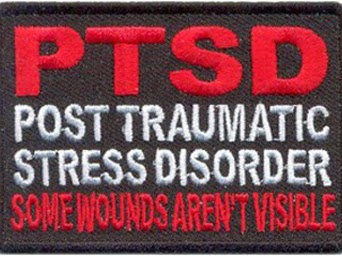
He has wounds you cannot see; not wounds of the body, but wounds of the soul, mind and spirit.  No one can see them. No one can see the scars. 

He drifts back to a time when he felt the pain for real. He seeks out answers he cannot find. At times he feels out of control and tries to find anything he believes will give him control, like booze and drugs, or he buries himself in work to the point of exhaustion.

He withdraws from relationships for fear of loss. He rejects authority for authority brought him harm in the past. He feels alone in a world that doesn’t seem to care. He hurts, but no one can see the wounds; no one hears his cries for help. He is judged by what others can only see on the surface. 

They don’t see the Unseen Wounds. They don’t hear his silent cries.  All he can do is ask, “Why can’t you see what this has done to me?”


“I am only one, but I am one. I can't do everything, but I can do something. The something I ought to do, I can do, and by the grace of God, I will.” ~Everett Hale

Monday, March 31, 2014

PTSD Today

More Vietnam Vets are Getting Help for PTSD

[Stars and Stripes, March 31, 2014]

Nearly 46 years after being wounded in Vietnam, Peter Halas applied for and received a post-traumatic stress disorder disability from the Department of Veterans Affairs.

The former Akron, Ohio, resident is not alone.

Dr. Edgardo Padin-Rivera, chief of psychology and PTSD expert at the Louis Stokes VA Cleveland Medical Center, said many Vietnam vets are applying for disability as they remember more about their combat experiences.

In Halas' case, he already had a disability from physical wounds he received in Vietnam. He was injured by a land mine in 1968.
But his PTSD disability was awarded only recently after specific memories came back while talking about the war with VA counselors.

Padin-Rivera said there are 326,530 Vietnam veterans with a PTSD disability -- a figure that is climbing every year.

As veterans age, the ways they had to defend against memories of combat begin to fade and they become more troubled by their war experiences, he said.

"It is about emotions of vulnerability and helplessness," he said. "And this brings up memories of those time periods when they felt vulnerable and helpless and those experiences have to do with war experiences."

So when veterans go to the VA for medical care, they are asked questions about their mental health, Padin-Rivera said.

"Now that we are asking the question, they begin to talk about it," the psychologist said. "We try to make it OK for them to talk about this and do away with the stigma of mental health. We saw this with World War II vets and are seeing it with the younger generation of vets from Iraq and Afghanistan."

The memories came back to Halas, 68, as he began talking to VA counselors about his military service.

He wrote about one incident in support of his PTSD diagnosis: "Fire fight for a day and a half, seeing fellow comrades wounded, some mortally by taking a direct hit by mortars ... Then being told to clean up blood, bones, organ splatters from inside of vehicles."

Halas said he's had anger issues over the years and now realizes it was part of the PTSD.

"You don't realize it until you start thinking about it," he said.

Halas -- who retired from Cavanaugh Building Corp. in Akron and moved to Temecula, Calif., in 2011 -- said he now receives about $1,400 a month for his PTSD disability, in addition to the $1,600 a month he was receiving for his war injuries.

He's also trying to straighten out the official record on his service awards.

The Department of Veterans Affairs has changed his DD-214 to reflect one Purple Heart, but Halas says he received three, and a Bronze Star, for his service.

He's still working on getting the file corrected and said he wants to leave an accurate account of his military experience for his family.

"It wasn't important before, when I was a young kid," said Halas, who attended Copley High School. "Now I am an older person and I think about it, those things are important. I damn near gave my life for it."

jcarney@thebeaconjournal.com


“I am only one, but I am one. I can't do everything, but I can do something. The something I ought to do, I can do, and by the grace of God, I will.” ~Everett Hale